Sash Window Repair vs Replacement: How To Decide
 Written by Murray Smith
Founder & Managing Director, Bespoke Windows
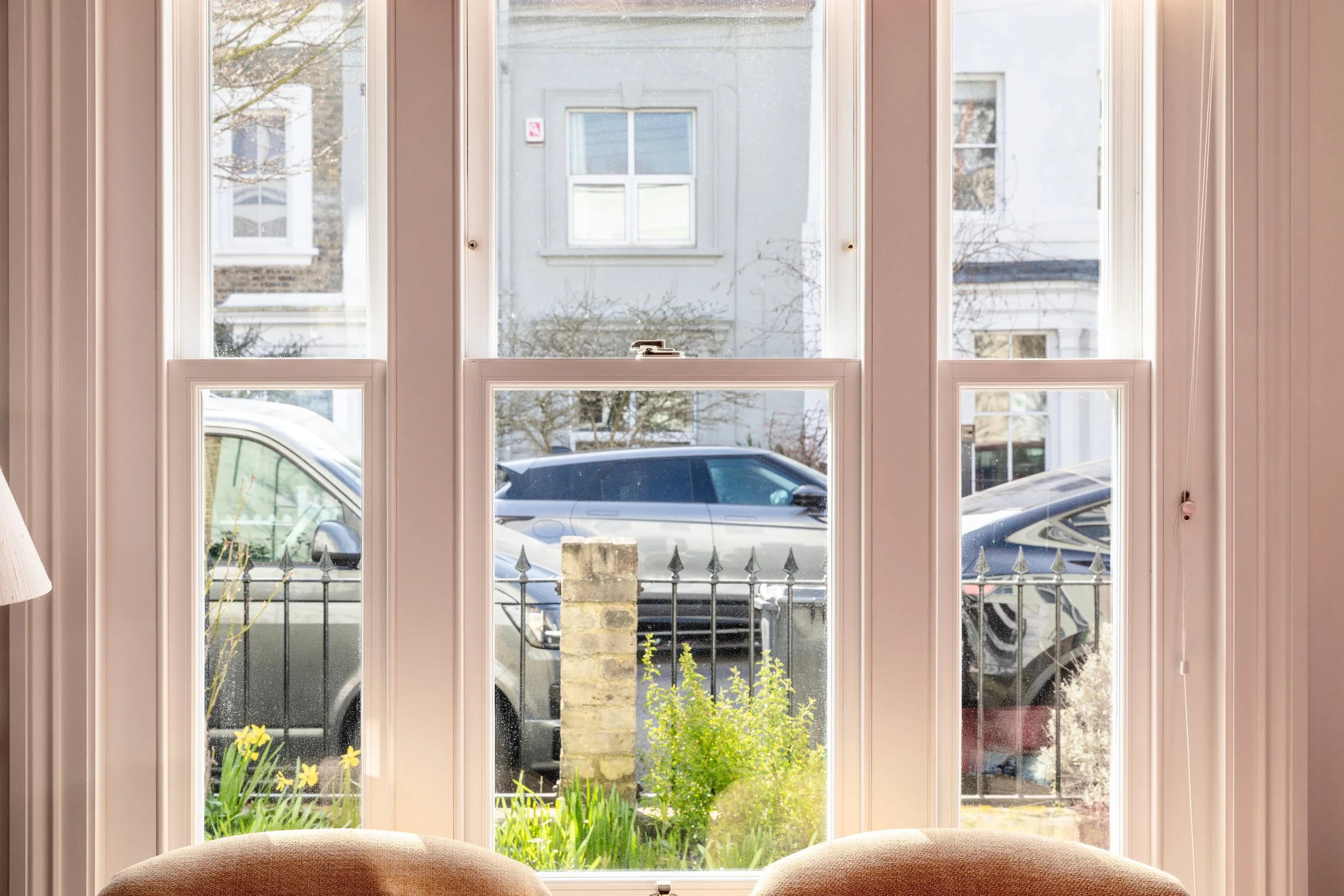
If your home has original sash windows, sooner or later you'll ask the question: "Can these be repaired, or do they need replacing?"
It’s a common question I’m asked when I survey a home. You want to keep your original sash windows, which are full of character and period charm. But you’re tired of the ‘heritage’ problems that come with them - poor heat insulation, noise issues, and the constant upkeep.
Repair or replace is the right question to ask. After nearly four decades surveying sash windows across South London I can usually answer it within a few minutes, but only because I know what to look for.
Most homeowners aren’t aware of the options available to them, and generalised advice given by a builder or a neighbour may not be best suited for their home.
So here's how I make the call, and how you can weigh it up yourself before you get a quote.
The short answer
If you live in a listed building or in a strict conservation area, repair is typically your only route. Not because it's better, but because it's what the regulations allow.
For everything else, the honest answer is that replacement is often better value, even when repair looks cheaper on paper. I'll explain why below, and I'll also be clear about the cases where I'd tell you to repair.
Before all else, check your building & area status
Listed buildings (a small percentage of homes)
If your home is listed, the original windows are almost certainly part of what's protected. Repair, sympathetic overhaul and, where more insulation is needed, secondary glazing are the standard routes.
Replacement is possible in some cases but you’ll need listed building consent and a strong justification, which can be expensive (both time & money-wise). We don't repair or fit secondary glazing at Bespoke Windows, so if this is you, you need a specialist joiner rather than us – and I'll happily say so.
Conservation areas (some homes)
Many of the South London streets we work on are in conservation areas. Here the rules are often about appearance from the street rather than preserving the original fabric, so like-for-like replacement is usually fine, provided the new windows match the originals in style, proportion and materials or an approved equivalent.
It's always worth checking with your local authority first.
No restrictions (most homes)
You have the freedom to decide whether to repair or replace your sash windows. The decision comes down to condition, cost and what you want from your windows. For customers we work with, it’s typically improved energy efficiency, lower on-going maintenance and less noise transmission.
What sash window repair actually involves
"Repair" covers a huge range, from an afternoon's work to a full overhaul that can take days per window.
A proper restoration of a tired heritage sash (Victorian, Georgian etc) typically means:
Cutting out rotten sections of the bottom rail, stiles or sill and splicing in new timber, or using resin fillers for smaller areas
Replacing perished putty and any cracked panes
Renewing sash cords, and often pulleys and weights
Easing sashes that have stuck, and replacing beads
Adding draught-proofing brushes to the beads and meeting rail
Stripping, priming and repainting inside and out
Done well by a specialist company, it can extend the life of your original windows by a good number of years.
The problem is that "done well" means different things to different companies, and the cost of doing it well is almost always higher than the first quote suggests once the work begins.
When repair is the right call
I'd tell you to repair rather than replace when:
The building is listed and repair is your only option, or you'd rather not go through the consent process.
The damage is localised. For example, a rotten bottom rail on one sash, a broken cord, a cracked pane. If the box frame, sill and most of the sashes are sound, a targeted repair is sensible.
The windows are genuinely special. For example, those featuring early Georgian glazing bars, crown glass and unusual joinery. Some windows are worth the extra money to hold onto. I started Bespoke Windows out of a love for period properties, so I'd never recommend replacing a window like that with anything less than it deserves.
You don't need better insulation. If the cold and noise of single glazed windows isn’t bothering you, repair and draught-proofing may be all you need.
When replacement is the better option
And I'd tell you to replace when:
Rot has reached the box frame or sill. Once the frame itself is going, you're rebuilding the window in situ, piece by piece, and the cost of repair begins to compete with a full replacement.
The window has years of cheap repair jobs. ‘Fixes’ like filler over rot, screws through the meeting rail, sashes painted shut. Every previous bad repair makes the next one more expensive and less effective.
You want double glazing. Retrofitting double-glazing into old sashes isn’t as straightforward or effective as it sounds, and new windows are the only way to get full-depth units in a frame that's sealed all round. Double glazing is where you’ll see meaningful improvements in energy efficiency, and better efficiency is probably what you’re hoping to achieve.
You want it done once. New windows come with a guarantee – ours, for example, is an unconditional 10-year guarantee covering all moving parts and labour. A repair isn’t likely to offer this.
You're tired of the maintenance. A restored timber window still needs repainting every five or six years. If that's the thing you dread, repair means you’ll be back in the same predicament down the line. Our heritage uPVC sash windows never need painting outside, and even our timber windows are made from Accoya, which resists rot and holds paint far longer than the wood often found in an original Victorian sash.
Your home has already lost its originals. A surprising number of the 'original' sashes I'm asked to look at were replaced in the 1970s or 80s with something inappropriate, as they were at a house we reverted back to sash windows on Heathwood Gardens in Charlton. There's nothing to preserve, and every reason to put back something that looks right.
Why replacement is often better value
With repairs, your money goes towards labour - not windows
Renovating or partly replacing a sash window takes far longer than replacing it completely. Stripping, splicing, filling, refitting and redecorating in someone's living room is slow, skilled work, and you’ll be charged for every hour of it.
The result is that a large share of a repair bill goes on labour and a small share on materials. So once the job's done you've spent a lot of money and don't have much new to show for it. If one of your goals is to add value to your home, it can be difficult to justify with repair work that ultimately may not improve efficiency.
New sashes never quite match old frames
When new or partly replaced sashes go into an original box, the paint finish on the new timber is factory-fresh while the box frame is often more than a hundred years old. However carefully it's decorated, the difference in surface, colour and texture shows, and it keeps showing as they age at different rates.
A new window starts from square
A new window, fully made up in a specialised factory, is fitted square, level and plumb from day one, which is why it opens, closes and seals the way it should.
Repair work, on the other hand, is being done in frames potentially over 100 years old. Naturally, the building has moved over time, meaning aligning repaired sashes in old frames to reduce draughts and noise is difficult, if not impossible.
Your guarantee
New windows from a reputable installer come with a ten-year guarantee and a FENSA certificate. Ours is unconditional: frames, glazing units, every moving part and all the labour.
Read the small print on any guarantee, though, as plenty of firms cover the frame for ten years and the moving parts for two. No repair I've ever seen comes with anything comparable.
The performance difference
This is obvious but worth saying. A repaired single-glazed sash, draught-proofed, is warmer than it was. A new sash window with A+ rated, argon-filled double glazing in a sealed frame is in a different league on heat loss, condensation and noise.
If your goals are to improve energy efficiency, reduce noise and lower future maintenance (these are the goals of most Bespoke customers) replacement is your best option.
One of our Copleston Road customers had condensation streaming down their old single-glazed bay every winter morning. It stopped being a problem for them when the new windows went in.
Can I partially replace my sash windows?
Fitting new double-glazed sashes into your existing box frames sounds like the ideal middle ground, and it's a common question I get asked.
It can work where the box is still square and sound, but it inherits both problems above: the new sashes have to be planed to fit a distorted box, and the fresh paint finish sits awkwardly against the old frame.
I covered this in more detail in my post on double glazing existing sash windows, if you need an expert opinion.
What about cost?
I'm wary of putting figures on this because every window is different, but a few things are reliably true:
A simple repair (cords, a cracked pane, easing a stuck sash) is cheap and worth doing if you’re generally happy with their performance already.
A full restoration of a badly deteriorated window is not cheap, and the quote usually grows once the work starts if more rot or problems are revealed.
Replacement has a higher cost per window but you’ll get a fixed price quote, with a guarantee attached, and it's the only option that meaningfully impacts your heating bills. The cost of sash windows in London currently stands at around £1,200 to £4,000 per window depending on material and size, with heritage uPVC suiting most budgets and timber being the more expensive option.
If you're getting quotes for both, ask the repair specialist what happens to the quote if they find more rot than expected. And ask the replacement installer what's covered by the guarantee and for how long.
Do you need planning permission to replace sash windows?
Not usually, for an ordinary home. Replacing windows like-for-like is normally permitted development. In a conservation area you may need to match the original style and materials, and some councils have Article 4 directions that remove permitted development rights, so check.
In a listed building you'll need listed building consent.
So, repair or replace?
Repair if you're in a listed building, if the damage is minor and if you’re generally happy with the performance of your windows (energy efficiency, noise etc).
Replace if rot is significant, if the windows have a long history of poor repair work, if you want double glazing and low maintenance, or if you want the job done once with a guarantee behind it.
And if you're not sure which you're looking at, that's what a home visit is for. I'll tell you honestly, even when the answer is to get a repair expert in.
If you're based in South London, visit our East Dulwich showroom or book a free home quote with one of our sash window specialists.