 Written by Murray Smith
Founder & Managing Director, Bespoke Windows

"Should I go for uPVC or wood?" is a question I'm asked most often during home surveys and at our London showroom.
My honest answer is that both have their pros and cons, and the right choice depends on what you're trying to achieve, or avoid.
For most homeowners in the market for new sash windows, the priority is keeping heat in and noise out. For others it's never having to repaint again, or keeping the traditional look of their period home. And for almost everyone, budget plays an important role.
One thing I'd ask you to put aside before reading is any preconception you might have of uPVC.
Yes, you’ve probably seen plenty of cheap-looking uPVC sash windows installed on beautiful period homes - and this makes me cringe too. But years of innovation mean high quality, heritage-style uPVC is now rivalling the appearance of wood - without the price tag or the maintenance.
Here are my thoughts on which materials to go for based on almost 40 years of developing and replacing sash windows throughout South London.
The short answer
Timber sash windows give you the original look and are usually preferred for listed buildings, conservation areas. However, high-quality timber is expensive, and it needs ongoing maintenance to last.
Quality heritage uPVC sash windows now come very close to the traditional timber look, for less money and far less maintenance. These have become one of the most popular choices for homeowners in recent years.
Economy uPVC sash windows are the cheapest option, although they’re best avoided for those who want to maintain the traditional look of their home.
Homeowners wanting the best of both worlds may choose timber at the front of the property, and high-quality uPVC at the back.
For a more in-depth answer, keep reading.
Start with what you’re trying to achieve
When choosing new sash windows, most customers I speak to are weighing up some mix of:
Heat insulation: a warmer house, fewer draughts and lower heating bills
Noise insulation: a quieter home, particularly for those on busy London roads
Low maintenance: less painting and upkeep
Traditional looks: windows that suit the age and character of the house
Budget: what they’re prepared to spend now, and over the life of the windows
In simple terms, that comes down to three qualities to weigh against your budget: aesthetics, performance and maintenance.
I’ve compared the three common sash window types below so you can see how they weigh up.
| Feature | Economy uPVC sash windows | Heritage uPVC sash windows | Timber sash windows |
|---|---|---|---|
| Appearance | Obvious giveaways: black gaskets, silver spacers, weld lines, clip-on horns | Subtle white gaskets and spacers, no visible welds, slim mid-rail, timber appearance | Most authentic, original period look |
| Heat insulation | Varies by manufacturer | A+ rated, argon-filled double glazing | A+ rated, argon-filled double glazing |
| Noise reduction | Depends on the glass and seals | Better: no hollow weight boxes or cord holes for noise and draughts to travel through | Hollow weight boxes and cord holes can act as echo chambers and draught channels |
| Maintenance | Low maintenance, wipe clean | Low maintenance, wipe clean, tilting sashes for easy exterior cleaning | Ongoing maintenance, regular repainting |
| Typical cost per windowFitted, inc. VAT | £1,200–£1,600 | £1,900–£2,600 | £2,500–£4,000 |
| Conservation areas and listed buildings | Unlikely to be permitted | Case by case | Often preferred |
| Best for | Tight budgets, modern homes where a traditional look isn't a priority | Most period homes: the timber look and low maintenance, without the high price of wood | Period home purists, listed and conservation properties, a choice of paint colour |
Why uPVC sash windows got a bad reputation
For years the trade-off was simple. uPVC sash windows were cheaper, lower maintenance and more efficient than the original single glazing they likely replaced.
But all this came at the cost of the traditional sash window look - something most period homeowners I speak to care about when replacing their windows.
The giveaways with cheap uPVC are always the same:
Thick black rubber gaskets around the glass
Silver spacer bars visible between the panes
Grey, furry draught-proofing brushes
Visible weld lines at the corners of the frame
Clip-on "horns" that look cheap
Wide mid-rails which don’t resemble wood
How heritage uPVC now rivals wood
In recent years, the best uPVC frames have changed so much that they can be almost indistinguishable from timber. And they’re in a completely different league from the cheap uPVC windows described above.
Our Heritage uPVC range tackles each of the old giveaways to best match the appearance of timber:
Black gaskets, silver spacers and grey brushes are now pure white
No visible welds
Run-through horns, reflecting the original timber look
Traditional painted trims used on the interior
The sashes tilt in for cleaning and never need painting outside.
Slim meeting rails
The result is a window with the performance and low upkeep of uPVC and the look of a traditional sash, at a more affordable price point than wood.
I’ve spoken with hundreds of homeowners who were set on wood at first, but after seeing their options, decided that Heritage uPVC was the best choice for their home and budget.
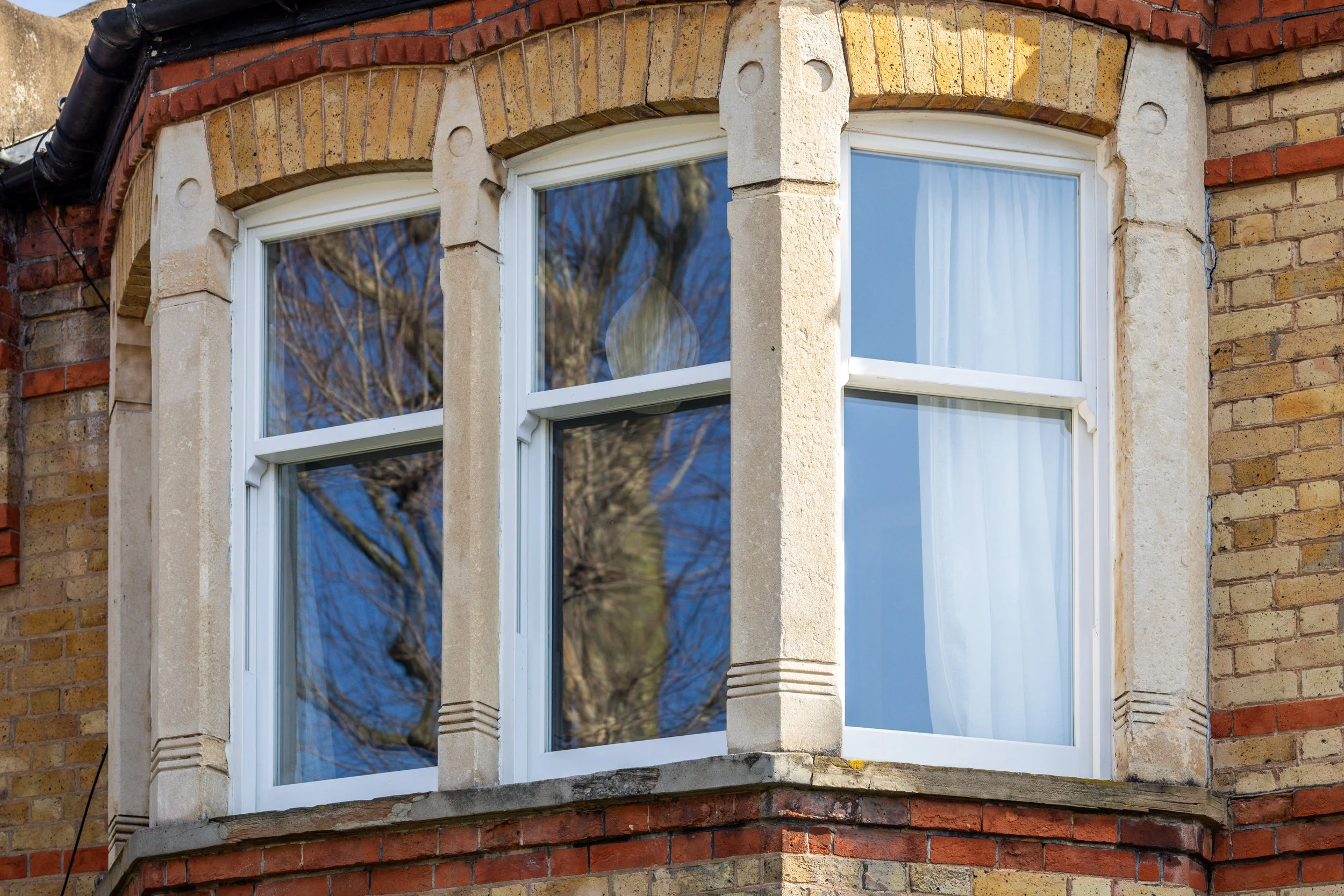
Our Heritage uPVC range: Wood you believe it’s not wood?
When timber windows are worth it
Nothing beats a well-made timber sash for authenticity. The joinery, the slim profiles and the way paint sits on wood all suit a period property. Plus, you can paint your windows any colour you like.
Long-lasting timber sash windows are made from materials like Accoya, a modified wood that’s far more stable and rot-resistant than standard softwood.
Lower-quality wood may be cheaper, but you’ll be compromising on lifespan.
If you’re going with timber, ask your supplier which wood they use and whether they offer an anti-rot guarantee. Our timber sash windows carry a 50-year anti-rot guarantee, so the swelling, sticking and rot people associate with old wooden windows are much less of a worry.
For some homes, timber isn't a choice but a requirement. If your home is listed, the original windows are usually protected. Replacing them needs listed building consent and a strong justification, and where it is allowed, timber is almost always expected. I cover this in more detail in Sash Window Repair or Replacement?
In conservation areas, new windows are generally expected to match the originals in style, proportion and materials. Some councils also use Article 4 directions, which mean you need planning permission to change windows that would otherwise be permitted development.
Most councils publish conservation area maps and Article 4 directions on their website, so that’s the quickest place to check. If in doubt, contact your planning team before placing an order.
Heat insulation
If you’re switching from single-glazed sash windows, this is where you’ll likely see a big difference.
Both uPVC and timber insulate well, but they do it in different ways.
uPVC frames are built with hollow internal chambers that trap air and slow heat loss. And because uPVC doesn’t swell, shrink or warp with moisture, the seals tend to stay tight for years with very little upkeep. That’s why uPVC generally has a slight edge on airtightness over the long term.
Wood is a natural insulator, so the frame itself resists heat transfer well. The catch is movement. Standard timber expands and contracts with the weather, and if it isn’t kept painted and sealed, small gaps can open up and let in draughts.
Well-made, well-maintained timber with modern double glazing can match uPVC, though the weight boxes in a traditional box sash remain a weak spot for draughts. A stable modified wood like Accoya also helps, because it moves far less than standard softwood.
In practice, though, the glass makes up most of a sash window, so the glazing has a bigger effect on heat loss than the frame material. When you get quotes, ask for:
The window energy rating or U-value (the lower the U-value, the less heat is lost)
Whether the units are argon-filled with low-E glass
What colour the spacer bars are, if appearance matters to you
Noise insulation
How much sound gets through depends on the glass, and on how well the sashes seal when closed.
Traditional timber box sashes have an extra weak spot: the hollow boxes that house the sash weights, and the holes the cords run through, act as echo chambers and draught channels.
uPVC sash windows use concealed balances instead, so there are no weight boxes for noise and cold to get through.
Maintenance and guarantees
This is where the two materials differ most.
uPVC needs very little: an occasional wipe of the frames and a clean of the runners. If you have upper-floor windows, tilt-in sashes are worth asking for, as they let you clean the outside glass from indoors. Heritage-style uPVC with internal timber trims just needs those trims repainting when you decorate the room.
Wood needs repainting outside to stay protected. Restored original sashes typically need it every five or six years. A modern, factory-finished timber like Accoya holds paint for longer. Ask your supplier what repaint interval they’d expect, and whether the windows arrive fully painted.
Whichever you choose, read the guarantee closely. Some firms guarantee the frame for 10 years but the moving parts for only two. Look for one that covers moving parts and labour, not just the frame.
Ours is an unconditional 10-year guarantee covering frames, glazing units, all moving parts and labour, plus the 50-year anti-rot guarantee on timber.
Cost
As a rough guide from our own prices, fitted heritage uPVC sash windows cost £1,900 to £2,600 per window, including VAT, and timber costs £2,500 to £4,000.
What moves the price within those ranges:
Size and weight: larger windows need heavier balances and more glass
Glazing: acoustic or triple glazing costs more than standard double glazing
Access: high or hard-to-reach windows may need scaffolding
Listed and conservation properties: design requirements and consent can add cost
When comparing quotes, make sure they’re like for like: the same glazing spec, the same guarantee, and whether fitting, making good and disposal of the old windows are included. And for timber, factor in the cost of repainting & maintenance over the life of the windows.
For more detail, see our sash windows cost guide, or try our free instant estimate tool.
Can you mix uPVC and timber sash windows?
Yes, and it’s a sensible solution. Many homeowners choose timber for the front of the house, where it’s seen from the street and where planning rules are usually strictest, and heritage uPVC at the back, where low maintenance and a lower price matter more.
If you go this way, keep the details consistent so the house still looks coherent: the same glazing bar pattern, horn style and colour front and back. Check the planning position for the front first.
Watch how we helped Paula maintain the traditional look of her home with timber at the front, and uPVC at the back.
How to decide
Choose heritage uPVC if:
You want the traditional sash look without the price of timber
Low maintenance is a priority
Your windows aren’t covered by listed building or conservation area rules that require timber
You’d rather spend the saving elsewhere in your home
Choose timber if:
Your home is listed, or in a conservation area where timber is required
Authenticity matters more to you than cost
You don’t mind the additional cost of repainting and ongoing maintenance
Consider both if you want timber where it’s seen and uPVC where it isn’t.
See them in person before you decide
Whoever you buy from, see samples in person and open and close them. Photos can hide the details that matter most: the gaskets, the spacer bars, the horns and how smoothly the sashes slide.
If your home is in South London, you’re welcome to compare heritage uPVC and timber side by side at our showroom at 344 Lordship Lane, East Dulwich, SE22 8LZ.
We’re open Tuesday to Friday, 9am to 5pm, and Saturdays 9am to 3pm.
Or book a free home quote and we’ll bring our samples to you.